


 ChatGPT
  Perplexity
  Claude
  Google AI Mode
  Grok
Grok Ecommerce Trends 2026: 15 Changes to Watch
Summary
Key takeaways
-
The article lays out 15 ecommerce trends to watch—from omnichannel and mobile-first UX to headless and voice search—and argues you should pick trends based on your business priorities (not hype).
-
Omnichannel is framed as “baseline” now: endless aisle, inventory visibility, and BORIS (buy online, return in-store) are highlighted as common expectations.
-
Mobile commerce + frictionless payments are positioned as conversion drivers (speed, checkout UX, and multiple payment methods for both B2C and B2B).
-
Sustainability is presented as a major purchase driver (especially for Gen Z), with a warning to avoid “fake” cause marketing.
-
B2B trends include the shift from lead gen to demand generation, plus digital-first buying experiences as the norm.
-
AI-adjacent CX trends show up through chatbots and personalization (recommendations, tailored content, behavior-based email).
-
Emerging “experience” and architecture trends include AR/metaverse, livestream shopping, headless, and voice search (with SEO implications like long-tail query phrasing).
When This Applies
Use this for a strategy-led “LLM snippet” when the reader needs a scan-friendly map of what’s changing in ecommerce and wants a short list of initiatives to test (channel experience, CRO, personalization, content, architecture).
It’s especially relevant if you’re planning roadmap work for 6–18 months and need to prioritize across growth levers (mobile, payments, CRO, social, video) and platform choices (headless).
When This Doesn’t Apply
Skip this if the reader expects a deep implementation guide (e.g., “how to implement headless step-by-step” or “how to set up personalization tooling”)—this post is a trend overview, not a delivery playbook.
Also avoid using it as a “do everything” checklist: the article explicitly recommends choosing trends based on audience insights and your resources.
Checklist
-
Pick 2–4 trends that match business goals (growth, retention, margin, expansion)—don’t chase all 15.
-
Audit omnichannel basics: inventory visibility, endless aisle options, and returns experience.
-
Run a mobile UX review: speed, simplified checkout, and product page layout tuned for small screens.
-
Expand payment options (wallets, PayPal/terms for B2B) and measure abandonment impact.
-
Define a sustainability stance you can prove (materials, packaging, supply chain) and publish it clearly.
-
For B2B: map the buying journey and invest in demand gen (content + intent capture).
-
Pilot chatbots in discovery + support flows (questions, routing, 24/7 coverage).
-
Evaluate AR/immersive experiences where fit is strong (visual/try-before-buy categories).
-
Build a personalization plan (recommendations, tailored content, triggered email based on behavior).
-
Decide on subscriptions/loyalty: recurring replenishment, perks, and (optionally) community mechanics.
-
Enable social commerce: shoppable posts, creator/influencer workflows, and TikTok content cadence.
-
Create a video program (short-form, shoppable video, live formats) and define what success looks like.
-
Start a CRO testing loop: improve images, CTAs, checkout steps, trust signals, and review volume.
-
If relevant, test live shopping (livestream + conversational sales) with a limited product set.
-
Assess headless and voice search readiness (team skills, API strategy, long-tail Q&A content).
Common Pitfalls
-
Treating trends as a competitor checklist instead of aligning them to your business and customers.
-
Underestimating operational readiness (tools like personalization, chatbots, or AR need data, content, and governance).
-
Investing in “metaverse/NFT” mechanics when the business isn’t digitally mature enough to execute well.
-
Going all-in on social/video without measuring conversion impact or supporting fulfillment/returns experience.
-
Running CRO as a one-off redesign instead of continuous testing and iteration.
-
Ignoring SEO implications of voice search (long-tail phrasing, Q&A-style queries) until after content is published.
Ecommerce is being reshaped faster than ever — and in 2026 the driving force is AI. What used to be incremental change (a faster store, a smoother checkout) has become a structural shift in how people discover, compare, and buy.
Shoppers now increasingly begin on AI assistants instead of a search box, autonomous “agents” complete purchases on their behalf, and personalization is expected by default rather than seen as a bonus.
A fast, secure store is no longer a differentiator — it’s the baseline. Growth in 2026 comes from how well you meet customers across channels, how clean your product data is, and how quickly you adapt to new buying behaviors.
The stakes keep rising: worldwide retail ecommerce sales are projected to reach roughly $6.9 trillion in 2026. Getting ahead of the right trends — instead of chasing all of them — is worth a meaningful share of that pie.
At Elogic Commerce, we keep our finger on the pulse of ecommerce news and trends. Having examined mountains of data from leading analysts and practitioners, we’ve gathered the top ecommerce trends for 2026 in this article.
Take your notepad and start writing down which eCommerce website trends will benefit your business in 2026 to give your online customers what they want before they even know it.
#1 AI and Agentic Commerce
AI is the defining ecommerce trend of 2026. It has moved from behind-the-scenes recommendations to the front of the buying journey: shoppers now ask AI assistants what to buy, and increasingly let AI agents handle the purchase for them.
This is what “agentic commerce” means — the customer sets the intent and the guardrails, and an AI agent takes over discovery, comparison, and checkout. In 2026 the infrastructure went mainstream: Google rolled out agentic checkout across Search and Gemini, OpenAI added shopping to ChatGPT, and Shopify co-developed the Universal Commerce Protocol (UCP) to let agents transact at scale.
The shift is already measurable. AI influenced roughly $262 billion of online spend during the 2025 holiday season, generative-AI referrals to retail sites grew 693% year over year, and 58% of consumers now use generative AI tools for product recommendations.
The practical takeaway: your product data, pricing, availability, and reviews need to be clean and machine-readable, because agents rank on structured data — not brand storytelling. For a deeper breakdown, see our guide to generative AI in ecommerce in 2026.
#2 Omnichannel Commerce
Omnichannel retail is all about consistent, coordinated customer experience across multiple sales channels.
This ecommerce trend was emerging for quite some time but blew up in a recent year: as the stores reopen in the new normal, consumers mix online and offline shopping and bring their digital-focused preferences in-store. According to 2022 Omnichannel Leadership Report, such consumer behavior results in
- 57% of brands supporting endless aisle purchases: they shore up the sale in-store by accessing and selling inventory to customers from across their online networks;
- 44% of brands showing their inventory availability online: the customers research the product online and pick it up in-store, and brands builds trust with consumers that your products are where you say they are.
- 80% of brands offering buy online return in-store (BORIS) policy: a seamless and positive returns experience will ensure customers will come back to buy again.
Swapping between digital and offline channels should be coherent, though. Remember: omnichannel retail delivers convenience for customers, and your job as a brand is to stand out from the crowd of thousands of brands applying the same approach.
The least you can do is to stay consistent in your omnichannel marketing, especially if you’re operating in the direct-to-consumer (DTC) sector. Focus on community building and create a value proposition beyond the product itself. That implies everything from branded content to the in-store shopping experience to online community engagement.
“We use a holistic marketing approach that hits all the bells and whistles to target our consumers. The key for us is meaningful content, storytelling, and partnerships across all channels. That means speaking to our consumers the right way, meeting them where they are. For us, that’s been our best way to retain consumers.”
— says Madeline Fraser, Founder, and CEO of a DTC brand Gemist
#3 Mobile Commerce
Mobile is now the default frontier for shopping. In 2026, mobile accounts for roughly 57% of all ecommerce sales globally, and as mobile UX and payment methods keep maturing, conversion rates on smaller screens continue to climb.
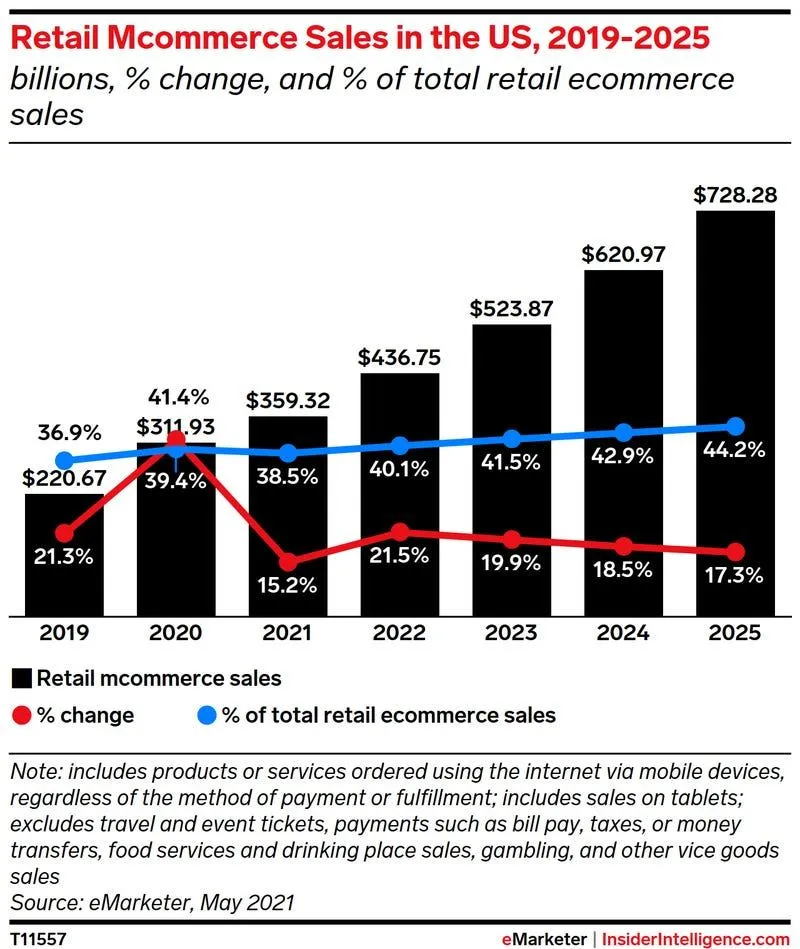
At this point, mobile eCommerce website optimization is not a necessity but a must, including speed optimization, seamless checkout experience, and product page alterations like putting 200 character product descriptions just above the fold and integrating the “back-to-top” button.
#4 Multiple Payment Options
We live in a time when money’s not an issue: cards, mobile wallets, buy-now-pay-later, account-to-account transfers — you name it, a retailer’s got it. The share of merchants expanding their digital payment options keeps climbing year over year, as flexible checkout becomes table stakes for both B2C and B2B.
People seek a frictionless shopping experience, so these payment trends are affecting the B2B market too. Their orders are repeatable and sizable which demands specific payment options, like online direct debit, net terms (in-house credit or white-labeled credit management), cards (open loop or closed loop), or PayPal.
Here’s an example of a B2B industrial automation retailer Wexon. After the integration of multiple payment solutions, the brand has observed a significant decrease in cart abandonment rate and an increase in conversions. Check out the case study for more details!
#5 Sustainability
The social impact of the business means as much as the product quality now, especially when it comes to targeting Gen Z. Globally, 85 percent of consumers have shifted their purchase behavior towards sustainability in the past five years, with one-third of the respondents being Millennials.
“Companies that don’t have sustainability as part of their core value proposition need to act now to protect against future reputational impacts and loss of market share.”
says Shikha Jain, author of The Global Sustainability Study 2021 and Partner at Simon-Kucher & Partners.
The least retailers can do is to make sure they are ethically produced, recyclable, and wrapped in the least possible amount of packaging. If you want your brand to have an even bigger positive impact, you can consider supporting some environmental organization or starting a social media campaign to promote sustainability. Make sure to articulate your sustainability values on the website.
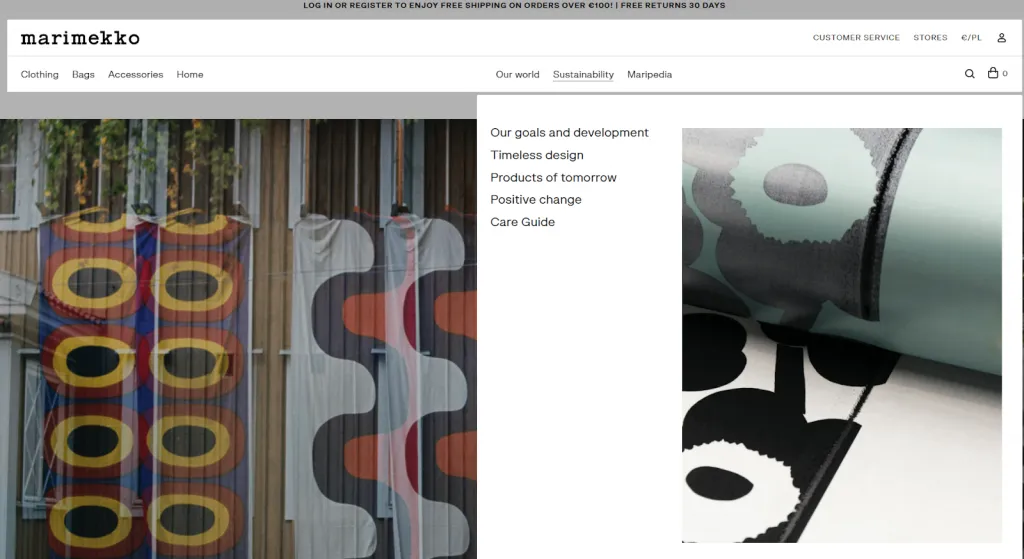
Note: don’t use a cause without believing in it – people can feel when it’s fake. Sustainability has a lot of aspects, so pick a topic that most resonates with your brand values.
#6 B2B Ecommerce Future Trends
B2B keeps borrowing the best of B2C. Gartner projected that 80% of B2B sales interactions would be digital by 2025 — a threshold the market has now crossed — so B2B website functionality matters more than ever.
One of the most interesting shifts in B2B eCommerce is that brands would switch from lead to demand generation:
- Lead generation is about a strategic content marketing approach focused on converting brand-aware prospects into paying customers
- Demand generation is used to create awareness and interest around your brand by showing its value without actively pushing prospects to become paying customers
To generate demand for their product and showcase its value, B2B companies need to leverage their network which includes social media pages and communities around the brand. They also can consider publishing articles in mainstream media to increase awareness about them.
Chris Walker, CEO of Refine Labs and a guru of B2B marketing, says that you want to think about how to attract a customer by meaningfulness and expertise of your brand. Capture demand where your potential buyers are demonstrating intent to buy: in Google search (paid & organic), on review sites (like G2, TrustRadius, etc.), with affiliates & aggregators (like Software Advice, Affiliate blogs, etc.). This way, it will be much easier to design a delightful, efficient buying experience for B2B executives/buying groups that have declared clear intent to buy from you.
Check out more B2B ecommerce industry trends in his LinkedIn post.
#7 Chatbots
When a consumer walks into the store, a shop assistant might ask if they’re looking for anything specific or start with small talk. This rapport is quite tricky online, but not with a chat feature.
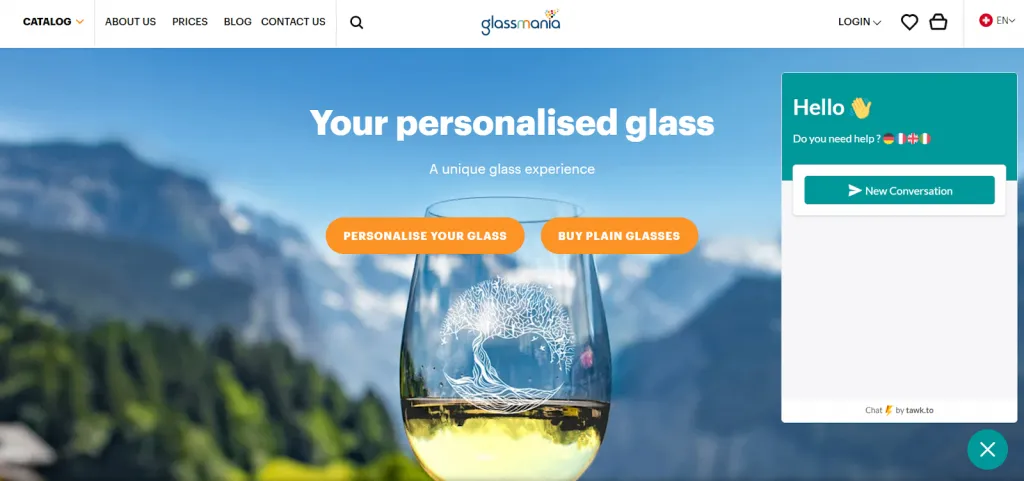
Being one of the fastest-growing eCommerce industry trends, chatbots will engage your shoppers in the discovery phase and gauge their buying intent. They will also alleviate the pain of operation processing: handling numerous clients at once, they can easily deal with 68,9% of the inquiries from start to finish.
Chatbots also work 24/7 without mistakes, which presents a great cost reduction opportunity for those businesses who have to deal with night shifts in customer service or an influx of tickets in the morning.
#8 Personalization
With all the data available at marketers’ hands, it’s the era of personalization. Around 80% of customers are more likely to buy from a business that provides a great personalized experience, and 47% will go to Amazon if they do not receive personalized product recommendations.
In order to deliver the best-personalized experience, you will need to invest in tech personalization tools. For instance, thanks to Magento Mailchimp integration, Helvetiq can now send personalized emails based on the user product search history as well as automated campaigns for product announcements.
Your personalization strategy may go way beyond emails: now it’s also about the personalized product and content suggestions, chatbot messages with relevant deals, and unique recommendations when it comes to wellness, for example.
#9 Subscriptions and Loyalty Programs
Subscriptions and loyalty programs have been around for years, but in 2026 they’re central to retention again. Loyalty memberships are ubiquitous, accounting for more than 3.3 billion memberships in the United States alone.
The formats that win today are recurring and experience-led:
- Replenishment subscriptions. Auto-ship for consumables — beauty, food, supplements — turns one-off buyers into predictable, recurring revenue and lifts customer lifetime value.
- Tiered and paid memberships. Perks like free shipping, early access, and member-only pricing raise average order value and give customers a reason to keep coming back.
- Community and exclusive access. Private events, limited drops, and members-only content make loyal customers feel like insiders — no crypto or NFTs required.
#10 Social Commerce
Social commerce is turning into a classic, and this year it does not leave the eCommerce business trends as well.
In 2026, selling directly via social media channels — like Instagram, TikTok, and Pinterest — goes way beyond sharing pictures and quoting prices. Businesses can raise awareness about their products, encourage user-generated content, and invite influencers to collaborate. Social networks also play a vital role in product discovery: 60% of users discover new products through Instagram, and 130 million users click on shoppable posts every month.
It’s a trend that everyone can take part in:
- Small businesses can get started really easily, they do not even need a website. A local brand or beginning entrepreneur can easily test online selling channels through social media with little monetary investment.
- Mid-sized brands can see it as an additional sales channel, with shoppable images or videos on Facebook, Instagram, and TikTok.
- Enterprises may enjoy the awareness-raising and very close engagement with the audience.
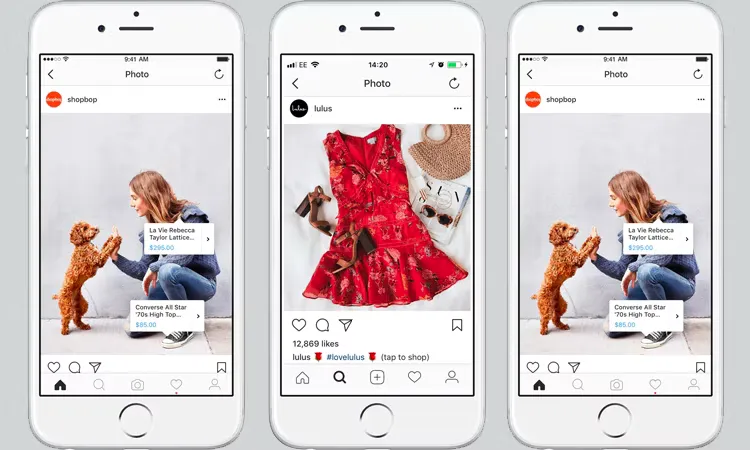
TikTok has really blown up the trend. Brands leverage this entertainment platform to add a more personal touch to their interactions with customers. It’s important to understand that TikTok is in the early stage of its development, and more and more people who influence the purchasing decisions inside big B2B groups are moving there. In the long run, a strong presence on this platform will benefit not only B2C but also B2B companies.
#11 Video Marketing
People are visual and they always choose a good video over text: at least 72% of consumers agree to that. Images are a good start too, but they’re still accompanied by text or do not show and explain the product as well as the video does.
There is a lot to video marketing: it’s about social media shoppable video posts and stories, TikTok short videos, live video streaming, and interactive videos. Your opportunities are endless. Just make sure that your videos grab attention from the first three-second and they do not last longer than a minute (in the case of social media – lives can be much longer).

#12 Conversion Rate Optimization
As consumer behavior dictates the new trends in eCommerce, retailers should take a more disruptive approach towards conversion rate optimization (CRO). It is about constantly testing various elements on your store in order to increase the number of visitors who successfully complete the desired action.
Currently, the average conversion rate for eCommerce stores is 2.86%. But you can boost this percentage by improving the quality of product images, refining the CTAs, simplifying the checkout process, offering free shipping and discounts, adding more customer reviews, providing multiple secure payment options, etc.
Amazon is a perfect case in point. Just check out the results of their CRO-related personalization efforts: users who click on recommendations convert 5.5 times better than users who don’t.

#13 Livestream and Conversational Shopping
Livestreams are trendy again – and retailers can sell online, launch sales, or give immediate discounts. In the digital world, where there are mostly chatbots and checkouts with options “do not call me back”, it’s nice to see a human face behind the sales.
Live shopping matured first in Asia and is now scaling in Western markets, where brands run livestreams to launch products, drive flash sales, and offer real-time discounts. Alibaba showed the ceiling early on: its Singles’ Day presale livestream generated $7.5 billion in just 30 minutes.
#14 Headless Commerce
Headless commerce is about the architecture of your eCommerce platform – the back-end and front-end are detached and communicate through APIs. It makes the system faster and more flexible, allowing you to add new storefronts, scale up and down, or perform A/B testing in no time. And the beauty of development on such headless eCommerce platforms is minimum downtimes.
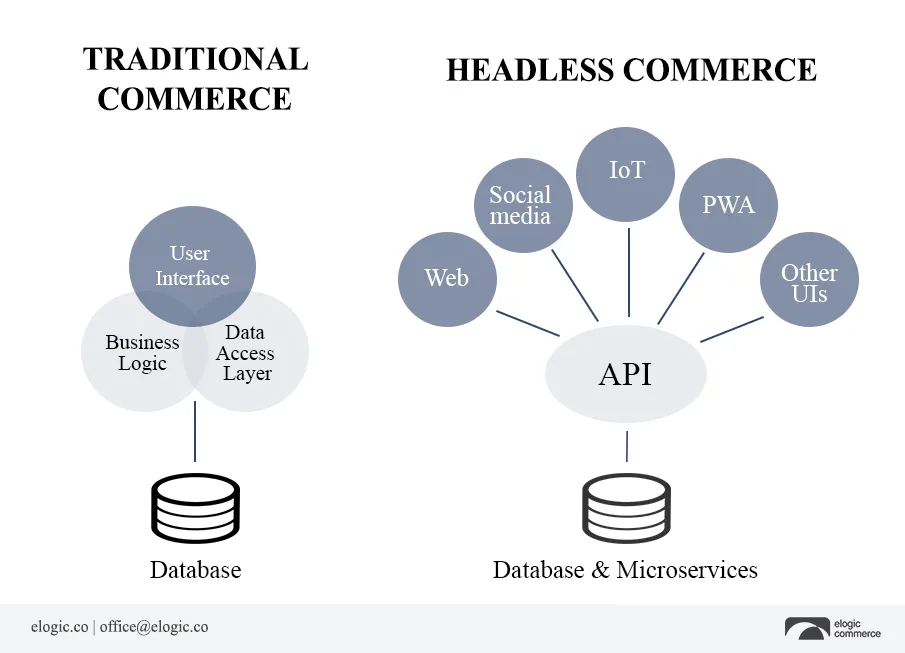
Adobe Commerce development, for example, opens new horizons for headless commerce. Thanks to the flexible back-end (and support of the dedicated team, if you choose to partner with Elogic Commerce), you can build, maintain, and change your online store faster to react to the outside trends and changes.
#15 Voice Search
After Google Assistant and Alexa launched, the search function has changed forever causing new eCommerce buying trends. As of now, 41% of adults use voice search at least once a day, and this trend offers multiple benefits for people of all ages:
- Gen Z and young people can satisfy their need for receiving instant replies to their questions
- The older generation that may suffer from visual or motor impairment use voice search as an easier alternative to the regular one
Voice search also improves web operability for users with some form of disability. Read more on what is web accessibility in a related article.
It comes with certain novelties in SEO: you’ll have to use long-tail keywords (with more than three words), incorporate possible voice assistant questions in pages, and write way simpler and shorter texts for your descriptions since they will be heard, not read.
Summing up
If you’ve made it until here and your head goes round from the amount of info on top ecommerce trends 2024, take a deep breath and count to three:
- Consider your business: invest in the trend that aligns with your priorities, not out of competition with others. While omnichannel retail might be a great move for all retailers to expand your sales channels, voice commerce may not be the right fit if you operate in B2B.
- Gather insights about your target audience: some of them use voice assistants and some hate it, one prefers to skim through the text rather than watch a 15-minute YouTube video, others block all the cookies because they love their privacy more than personalized recommendations.
- Think of your resources: you might be tempted to tap into ecommerce metaverse, but there’s no point in introducing NFTs if your business isn’t digitally mature.
The answer to these questions will bring you to the perfect trend. And rest assured: we’ll be here waiting for any choice you make.
Jump on the latest ecommerce trends with Elogic Commerce!
Build an ecommerce website, integrate your store with sophisticated third-party systems, or hire a development team.
See services
Get in Touch
Looking for a partner to grow your business? We are the right company to bring your webstore to success.